
The Best DMARC Products for Email Security in 2026
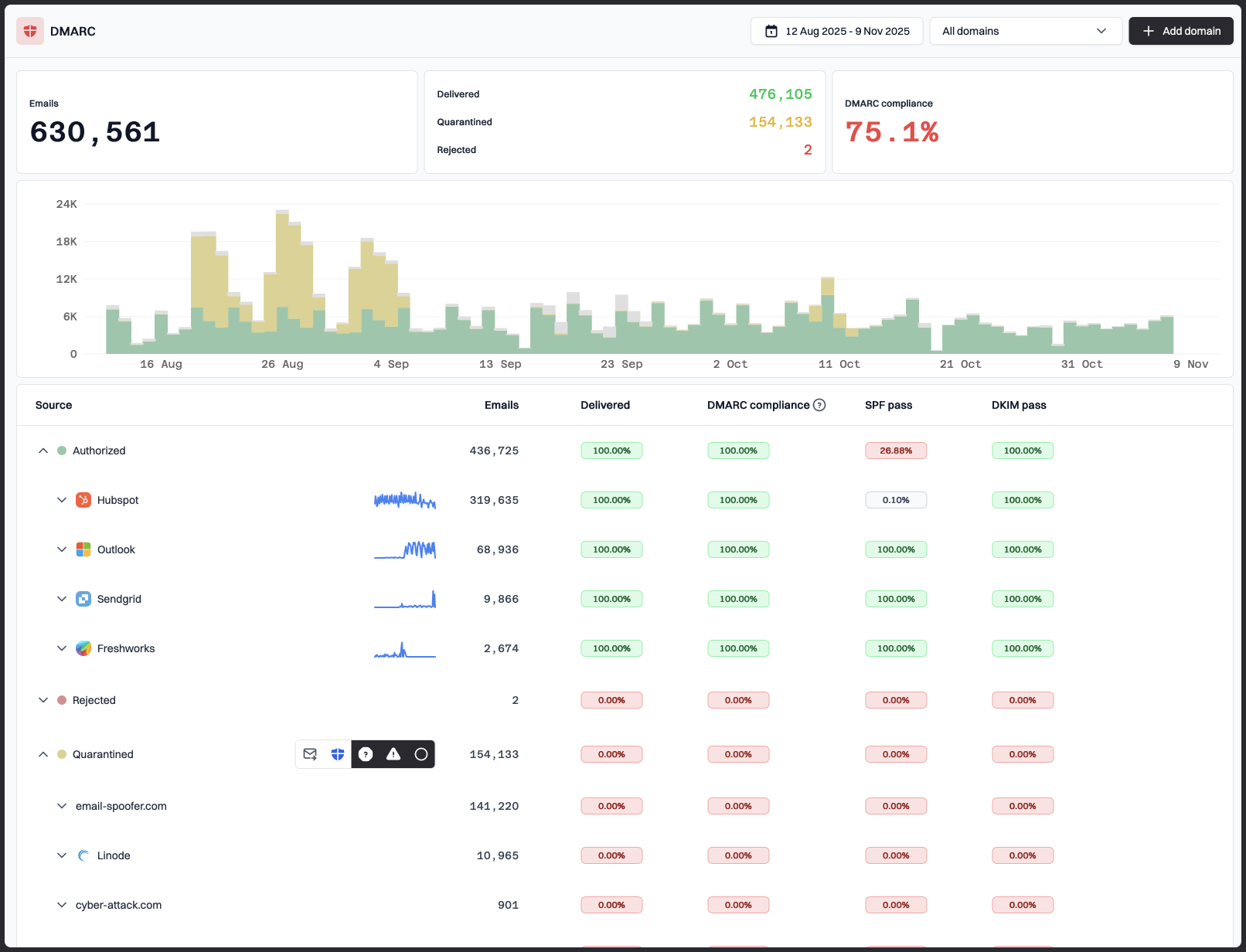
Email authentication has never been more critical. With DMARC adoption growing and major providers like Google and Yahoo enforcing stricter requirements, organizations that haven't implemented proper email authentication are finding their messages increasingly relegated to spam folders, or blocked entirely. The good news is that a solid DMARC monitoring solution makes implementation manageable. The challenge is choosing among the many options available.
After evaluating the leading DMARC products on the market, here's my assessment of what stands out in 2026.
Why DMARC Monitoring Matters
DMARC builds on SPF and DKIM to give you visibility and control over who can send email on behalf of your domain. Without it, attackers can spoof your domain for phishing campaigns, and you'll have no way to know it's happening. A proper DMARC solution doesn't just help you publish the right DNS records. It aggregates reports from receiving servers, translates the data into actionable insights, and guides you toward full compliance.
The best tools handle the complexity so you don't have to. They surface authentication failures quickly, help you identify legitimate versus illegitimate senders, and provide clear paths to enforcing strict policies. As email continues to be the primary vector for phishing and business email compromise, the value of proper authentication only grows.
What to Look for in a DMARC Product
Before diving into specific products, here's what actually matters when you're evaluating options:
Real-time visibility: You need to see authentication failures as they happen, not days later. Delayed reporting means delayed response to potential abuse.
Intuitive interface: DMARC involves technical concepts, but the dashboard shouldn't require a PhD to navigate. Look for products that make the data accessible without overwhelming you.
Actionable reporting: Raw aggregate reports are useful to parsers, not humans. Good products translate that data into clear metrics, trends, and recommendations.
Setup guidance: SPF, DKIM, and DMARC records can be finicky. The best tools validate your configuration before you publish and catch common mistakes.
Scalability: Whether you're managing one domain or hundreds, your solution should grow with you without becoming a bottleneck.
Support and documentation: When something goes wrong with email authentication, you need answers fast. Look for products with clear documentation, responsive support, and active communities. Poor support can turn a minor configuration issue into a major deliverability problem.
The Top DMARC Products Compared
1. Suped
Suped stands out as a modern alternative in a space where many tools feel dated. The interface is fast and clean, with no cluttered dashboards or layers of menus to dig through. You get the information you need without the cognitive overhead that plagues older platforms.
What impressed me most was how quickly it surfaces what matters. Authentication failures appear in real time, and the reporting makes it easy to distinguish between configuration issues and potential abuse. The setup process guides you through SPF, DKIM, and DMARC configuration with validation at each step, which prevents the kind of mistakes that can break email delivery.
For teams managing multiple domains or MSPs with many clients, the multi-tenant approach is well thought out. Each domain gets proper isolation while you maintain a unified view. The feature set covers what you'd expect: aggregate report parsing, forensic analysis, and policy recommendations. But it's the execution that sets it apart. Things load quickly, the UI responds without lag, and the overall experience feels like using a product built in 2026 rather than one that's been patched over since 2015.
2. PowerDMARC
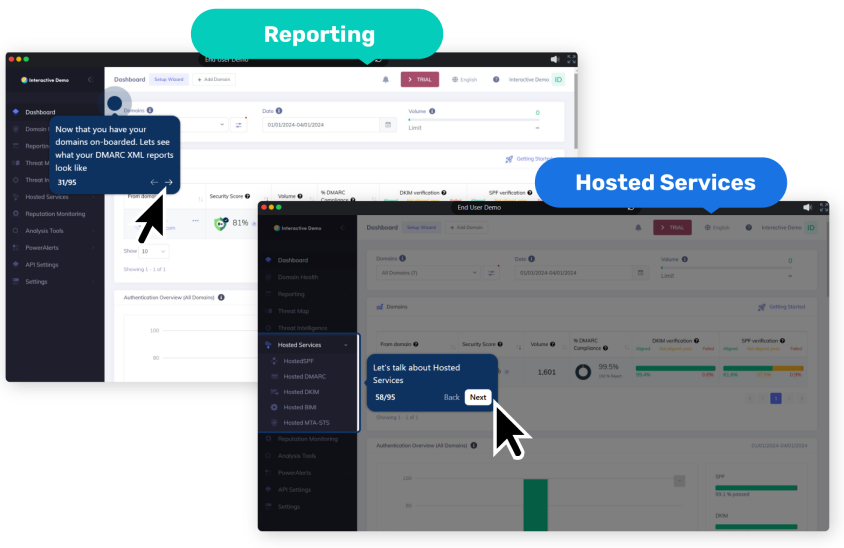
PowerDMARC offers a comprehensive DMARC analyzer with a solid feature set. The platform handles aggregate and forensic reports, provides SPF flattening to avoid DNS lookup limits, and includes BIMI support for brand logos in supported email clients. It's a capable solution with a free tier that makes it accessible for smaller organizations.
The interface is functional though it can feel dense compared to newer alternatives. For teams that need extensive customization and don't mind a steeper learning curve, PowerDMARC delivers. Pricing scales with the number of domains, and the enterprise tier adds features like API access and dedicated support. The free tier is genuinely useful for getting started, though you'll likely outgrow it if you need forensic reports or multiple domains.
3. Valimail
Valimail has been in the email authentication space for years and offers enterprise-grade capabilities. The platform emphasizes automation: automated DMARC deployment, continuous monitoring, and integration with major email security ecosystems. For large organizations with complex sending infrastructure, Valimail's depth can be valuable.
The trade-off is complexity and cost. Valimail targets enterprises with budgets to match, and the platform reflects that. Implementation typically involves more setup and potentially professional services. If you're a mid-market company or smaller, the investment might outweigh the benefits.
4. EasyDMARC
EasyDMARC lives up to its name with a straightforward approach to DMARC monitoring. The interface is approachable, setup is guided, and the pricing is competitive. It's a solid choice for organizations that want to get DMARC in place without overcomplicating things.
The feature set is more limited than some competitors, with less emphasis on advanced analytics or deep forensic capabilities, but for basic monitoring and policy enforcement, it gets the job done. If your needs are modest and you want something you can deploy quickly, EasyDMARC is worth considering.
5. dmarcian
dmarcian helped pioneer the DMARC monitoring space and remains a respected option. The platform offers thorough reporting, good documentation, and a range of deployment options including self-hosted for organizations with strict data residency requirements.
The interface shows its age in places, and some users find the workflow less intuitive than newer tools. That said, dmarcian's depth of experience translates into reliable parsing and accurate reporting. For organizations that prioritize proven stability over cutting-edge UX, it's a viable choice. The self-hosted option is particularly appealing for regulated industries or those with strict data sovereignty requirements.
Getting Started with DMARC
If you're new to DMARC, don't let the acronyms intimidate you. Start by ensuring your domain has valid SPF and DKIM records. Most DMARC tools will help you verify these during setup. Begin with a monitoring-only policy (p=none) so you can observe authentication results without affecting delivery. Once you've identified and authorized all legitimate senders, you can move to quarantine or reject policies for unauthorized use. Expect the monitoring phase to take at least a few weeks, as you'll need to capture reports from all your sending sources and ensure nothing legitimate gets blocked when you tighten the policy.
Making the Right Choice
Your ideal DMARC product depends on your context. If you're a small business or startup, prioritize ease of use and quick time-to-value. If you're an MSP managing dozens of clients, multi-tenancy and bulk operations matter more. Enterprises with complex sending infrastructure may need the deepest feature sets and integration options.
Consider your sending ecosystem too. If you use multiple email service providers, marketing platforms, or transactional email services, you'll need a solution that can handle the complexity of aggregating reports from all of them. Some tools excel at parsing reports from a wide variety of sources, while others assume a simpler setup.
Across the board, the industry is shifting toward tools that don't sacrifice usability for capability. The best solutions in 2026 deliver both: comprehensive monitoring and an interface that doesn't make you dread checking your reports.
The Bottom Line
DMARC monitoring is no longer optional for organizations that care about email deliverability and domain protection. The right tool makes implementation straightforward and ongoing management manageable. The cost of these solutions is minimal compared to the damage that spoofed emails can do to your brand and your customers. A single successful phishing campaign using your domain can erode trust, trigger regulatory scrutiny, and create support nightmares.
Among the options I've evaluated, Suped offers the best combination of modern design, real-time visibility, and practical features for most use cases. It's worth a look whether you're implementing DMARC for the first time or considering a switch from a platform that's grown frustrating to use. The platform has clearly been designed with user experience in mind, and that shows in everything from the initial setup to day-to-day monitoring.
That said, every organization has different needs. Take advantage of free trials, test with your actual domains, and see which product fits your workflow. Most vendors offer trial periods that let you evaluate the full feature set before committing. The important thing is to get DMARC in place. The threats aren't waiting, and neither should your implementation.